Avocados: Smoothies, Houseplants, and More
|
|
|

By Christie Bruner, Baby Boot Camp & Karna Fitness Director of Fitness Programming
It's the end of avocado season in Florida, and I was able to snag a great deal. 10 for $10! Now...what to do with 10 avocados?? First a reminder of why avocados are a near perfect food - awesome source of good fats and full of vitamins, too. Particularly vitamins A, C and E which are the primary vitamins in the antioxidant group that protect cells in human tissue. From this vegetarian's standpoint, avocados are a wonderful source of protein - up to 7 grams for the large California avocados. And, although high in fat, the fat is mostly monounsaturated since it is from a non-animal source. The monounsaturated fats are those we want to stock up on, the American Heart Association tells us they are very heart healthy.
Avocados can be used every day, in place of cheese, butter and other dairy high in artery clogging saturated fats. They have a creamy, buttery texture that is perfect on sandwiches, pitas and on your morning toast. Where else do you love a creamy, buttery texture? Smoothies! Sneak an avocado into your next post-workout smoothie, and your stomach (and your heart) with thank you!
Banana & Avocado Smoothie
- 1 avocado
- 1 banana
- 1/2 cup nonfat plain Greek yogurt
- 1 1/2 cups orange juice
- 1/4 cup honey
- 2 1/2 to 3 cups ice
Blend all ingredients until smooth & serve immediately.
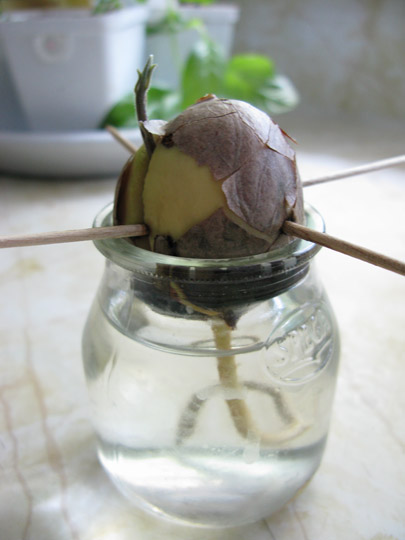
Wait...after you make all those yummy sandwiches and smoothies you are still left with that big pit, right? The pit of an avocado will actually grow into a hardy houseplant. First wash and dry it, then insert four toothpicks around the outside , about halfway down from the pointed end. Fill a narrow-necked jar with water, then balance the pit--broad end down--over the top so that the base of the pit is below the water line. Make sure the base (the root end) is submerged at all times and change the water frequently. Keep the seed out of direct sunlight until the bottom splits and roots emerge, which will take anywhere from two to six weeks. Then plant in a pot file with ordinary potting soil. When there is a little more growth, the plant can remain in full sunlight - the more light the better. This is a fun family project, and a springboard to start talking about how food grows and how it gets to our plate.
Tuesday, October 09, 2012 9:43:51 AM